…and that is exactly why your CPA is climbing while your net profit stays flat. You are essentially pouring water into a bucket that has a giant hole in the bottom.
You do not need more traffic to grow next quarter. You need to stop losing the people you already paid to acquire.
The math behind repeat purchase obsession
Most Shopify store owners obsess over acquisition because it feels like direct control. If you spend 500 dollars on Meta ads, you get X amount of impressions and Y amount of clicks. It is tangible.
However, the real growth in a 100k a month store happens in the second and third order. If your repeat purchase rate is below 20 percent, you are fighting a losing battle against your own acquisition costs.
Think about a typical skincare brand. If a customer buys a 50 dollar serum once and disappears, you likely spent 25 dollars to acquire them. Your margin is thin.
If that same customer comes back 60 days later to buy a refill without an ad spend cost, your LTV jumps instantly. This is where the business actually becomes profitable.
The friction trap on mobile browsers
Your mobile website is built for discovery, not for retention. Browsers are designed to let people leave, which is the antithesis of building a loyal customer base.
When a customer visits your store on an iPhone, they are fighting against slow load times and multiple tabs. They are one swipe away from a competitor or a social media feed.
We analyzed a grocery delivery store recently. They had high traffic but a repeat purchase rate of only 8 percent. The culprit was a login process that required a password reset every time.
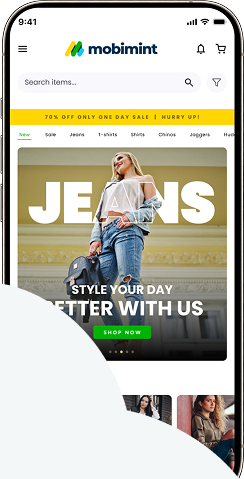
Native experiences solve this. When someone uses an app, they stay logged in and the interface is optimized for their specific screen size.
The comparison of touchpoints
To understand the difference in engagement, look at how different channels perform in practice. This table outlines why some methods fail to generate repeat orders.
ChannelFriction LevelOpen RatesConversion ImpactEmailHigh20 percentLow/DelayedMobile WebHighN/ALow/Frequent drop-offsPush NotificationLow60-80 percentHigh/ImmediateSocial MediaMedium10 percentLow/Distraction heavy
The playbook for higher retention
You can run this strategy starting tomorrow without spending a dime on new ads. First, segment your last 90 days of customers into two buckets. Those who bought once and those who bought twice.
Take your one-time buyers and offer them a specific bundle related to their first purchase. Use a simple email sequence, but keep it personal.
Second, audit your checkout flow. If it takes more than three clicks to reorder an item, you are losing money. Simplify it to one-tap reordering.
Third, implement a feedback loop. Ask those repeat customers why they came back. Their language will tell you exactly what your marketing copy is currently missing.
Why email is not enough anymore
Email is a crowded room. Your message is fighting against a thousand newsletters, bank alerts, and spam filters. It is passive by nature.
On the other hand, push notifications are direct. When a customer has your store on their home screen, you own the real estate on their device. It is not an invitation; it is a presence.
A brand we looked at moved their repeat purchase notification from email to a native push alert. Their click-through rate jumped from 3 percent to 40 percent in one week.
Email still has a place for long-form storytelling. But for transactional reordering, it is becoming less effective every quarter.
The most expensive customer is the one you have to pay for a second time.
The hidden cost of app-less mobile commerce
Most store owners think building an app is a luxury for brands like Lenskart or Amazon. They assume it costs 50,000 dollars and six months of work. This keeps them tethered to a mobile browser that is bleeding revenue.
When you force a customer to navigate a mobile site for the fifth time, you are asking them to perform a chore. A native app turns that chore into a routine.
Consider the difference between a website visitor and an app user. An app user has already signaled high intent by choosing to download your store.
They are effectively saying they want you in their pocket. If you ignore that signal, you are turning away your most profitable segment.
What to measure this week
Ignore vanity metrics like page views or social media likes. These do not pay the bills. Focus entirely on the repeat purchase rate and the time between orders.
If you see that your average repeat customer buys every 45 days, your goal is to trigger an action on day 40. Send them something that adds value, not just a coupon code.
Look at your conversion rate by device type. If your desktop conversion is 3 percent and mobile is 0.8 percent, the issue is not your product. It is the platform.
Testing this gap is the first step toward fixing it. You might find that your mobile traffic is actually high quality, just poorly served.
Building the feedback loop
After you reach out to those customers, track the responses. Do they want better shipping updates? Do they want a subscription model for their favorite products?
Use that data to refine your store layout. If customers keep complaining about a missing feature, adding it will move the needle more than any discount campaign.
I am currently testing a new approach where we categorize customers based on the specific SKU they purchased first. The goal is to see if specific products lead to higher lifetime value than others.
Takeaway
Retention is a result of reducing friction, not increasing discounts. Focus on making the second purchase as effortless as the first to see your bottom line stabilize.
If you are interested in seeing how a dedicated mobile interface compares to your current mobile site, feel free to drop me a note with your store link and I can share what I see.