Do I really need another channel to manage? That is the question I hear on almost every discovery call. I started this journey thinking store owners wanted a fancy icon on a phone screen to brag about at networking events. I was completely wrong.
After speaking with dozens of store owners, we noticed the same problem keeps surfacing. It isn’t about the design or the vanity of having an app. It is about the crushing cost of bringing a customer back for their second purchase.
The obsession with acquisition
Most ecommerce founders spend 90 percent of their mental energy on customer acquisition cost, or CAC. They obsess over ROAS on Facebook ads or the latest SEO trick to rank for a high-volume keyword. They look at the Shopify analytics dashboard and see a massive pile of new traffic arriving every day.
This is where the ego takes over. When a store has 50,000 monthly visitors, the owner assumes they are winning. They view mobile traffic as a raw number to be converted into a first-time sale. They treat every visitor as a stranger who needs to be convinced to pull out their credit card right now.
But the numbers rarely lie. Even if you achieve a decent conversion rate on mobile, your repeat purchase rate often sits below 15 percent. You are essentially paying to rent a customer for a single transaction, then handing them back to the platform algorithms the moment they leave your site.
The discovery of the retention gap
Three months ago, I interviewed the owner of a mid-sized beauty brand doing about $80,000 a month. They were getting crushed by rising shipping costs and a decline in organic social reach. They thought an app would fix their conversion problem by making checkout faster.
We looked at their data together. The reality was that their biggest bottleneck wasn’t the checkout speed. It was the fact that their email open rates had dropped to single digits over the last six months. They were paying for email marketing software that was effectively shouting into a void.
They realized that their best customers—the ones who actually buy again—were checking their phones constantly but ignoring their inbox. The app wasn’t a checkout tool. It was a private channel to bypass the noisy email clutter.
Why email is failing the modern brand
-
Aggressive spam filters are catching more legitimate promotional content.
-
Gmail’s promotions tab acts as a digital graveyard for most marketing efforts.
-
Younger shoppers treat email as a formal communication channel, not a shopping feed.
-
Brand identity gets lost in a sea of generic text-based newsletters.
-
The lack of immediate interactivity forces high bounce rates on product pages.
The real shift in store owner priorities
I stopped selling “app features” and started listening to the pain. Owners are not asking for complex loyalty programs or AI-driven recommendations. They are asking for a way to stop paying Meta for the same customer three times in a row.
Most of the owners I talk to are tired of the hamster wheel. They want a sticky experience. They want to be able to nudge a customer with a push notification that doesn’t cost an extra fee every time it hits a device.
This is a fundamental shift in perspective. You are not building an app to look cool. You are building an app to reclaim your margins from the platform taxes you pay on paid traffic.
A comparison of reach channels
ChannelCost to SendAverage Read SpeedPrimary BarrierEmailSubscription Fee6-24 HoursPromotions FolderSMSPer Message Fee5-10 MinutesCost and RegulationsPush NotificationFixed/ZeroSecondsApp Download
The myth of the technical barrier
Another major assumption I held was that store owners cared deeply about the technical specifics of native development. I thought they wanted to talk about React Native or Swift or the intricacies of the Apple App Store approval process.
I was wrong. They want it to be done. They want a tool that takes their existing catalog and makes it look professional without a six-month development timeline. They have zero interest in becoming a mobile software engineer.
When I show them that an app can be configured and live in under two hours, the reaction isn’t usually Wow, that’s fast. It is almost always Wait, so my store can actually look like that for a fraction of the cost I was quoted by an agency?
The most successful stores are shifting from a get the sale mindset to a keep the attention reality.
The hidden cost of the mobile browser
Look at the data from a site like Statista. Mobile accounts for over 70 percent of traffic for most fashion and wellness brands. Yet, the mobile web experience is fundamentally limited by browser constraints.
Every time a user has to re-enter their credit card details or search for their login, you lose them. The friction adds up. If your store has 10,000 mobile visitors, and you lose just 2 percent due to browser lag, that is 200 lost customers every month.
At an average order value of $100, that is $20,000 in monthly revenue literally evaporating. You are paying for that traffic, but the mobile browser is leaking it before they even reach the checkout button. Fixing the leak is usually easier than buying more traffic.
What I got wrong about the timeline
I thought owners would want a long, consultative process. I figured they would want to spend weeks on user experience design and custom feature sets. I kept trying to offer custom roadmaps.
Almost everyone rejected that. They are busy managing inventory, dealing with suppliers, and running day-to-day operations. They don’t have time for a three-month development project. They want a product that solves the revenue leak today, not next quarter.
This led us to standardize our internal setup process. We stripped away the fluff and focused on the core functionality: a clean interface, fast checkout, and a way to send notifications. It turns out that simplicity is the most valuable feature you can provide to a stressed founder.
The testing phase of the business
We are currently testing a new onboarding flow where the owner doesn’t even have to write a single line of code. We are measuring how many users complete the setup process in under 60 minutes. This is where I am spending my time right now.
I am also looking at how early users interact with their push notification dashboards. I want to see if they are using them to spam their customers or if they are using them to offer genuine value, like early access to product drops. This will define how we build the next iteration of the software.
Takeaway
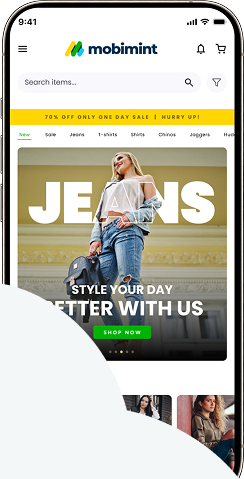
Your mobile browser is likely leaking more revenue than your entire ad budget is bringing in. If you have a solid brand, stop trying to buy more traffic and start focusing on keeping the visitors you already have. If you are curious about what your specific mobile store could look like as a native app, send me a reply with your store URL and I will take a look.