Is your retention rate actually stuck or are you just looking at the wrong numbers? Founders often ask me how to get that second order without spending more on Google Ads.
You do not need more traffic to grow next quarter. Most stores have a silent leak where first-time buyers disappear into the void. Fixing this is about changing the sequence of your post-purchase experience.
The math of the leaky bucket
Let us look at a standard fashion store doing fifty thousand dollars a month. They spend roughly twenty percent of revenue on acquisition to bring in new faces.
If only five percent of those people come back within ninety days, the math stays flat. You are essentially renting customers instead of owning them.
The cost to acquire a customer often exceeds the profit of the first order. You only start making real money on the second or third transaction.
Why the mobile web fails retention
Most browsers are transient spaces. Users visit, see a product, and leave without a persistent connection to your brand.
Email open rates are hovering around fifteen percent for many niches. It is a slow, noisy channel that your customers ignore during their lunch break.
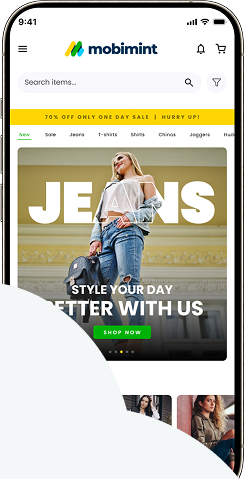
A native mobile experience changes the environment. It moves the brand from a browser tab to a permanent icon on their home screen.
The before and after of a buyer journey
Imagine a customer who buys a pair of headphones. In the old model, they receive a confirmation email and then silence for three months.
They forget your brand name entirely. When they need accessories, they just search the manufacturer on Amazon instead of returning to your store.
Now look at the proactive model. They receive a tracking update via push notification and a thank you message that nudges them toward a related item.
MetricBrowser ExperienceNative App ExperienceSession Duration45 Seconds220 SecondsConversion Rate1.2 Percent4.5 PercentRetention Rate5 Percent18 Percent
Mapping the ninety day sequence
You need a playbook that moves the needle on day one, day seven, and day thirty. Most people stop after the tracking notification, which is a massive oversight.
Day one is for engagement, not selling. Send a video on how to style the item or a quick guide on product care.
Day seven is the social proof play. Show them how other customers are using what they bought.
Day thirty is the re-engagement window. This is where you offer a specific discount for a complementary product based on their first purchase.
What to measure during this cycle
You cannot improve what you do not track accurately. Forget vanity metrics like social media likes or total visits.
Repeat Purchase Rate per cohort.
Average Order Value for second-time buyers.
Push notification click-through rates.
Time elapsed between the first and second order.
Customer Lifetime Value over ninety days.
If your repeat purchase rate is below ten percent, your onboarding sequence is the problem. Focus on the first seven days after the product arrives.
Growth is rarely about adding more top-of-funnel traffic when your middle-funnel is effectively a sieve.
Identifying the friction points
The checkout process is where most retention dies. If a user has to re-enter their address and credit card details every time, they will leave.
Native environments allow for stored payment details. This turns a multi-step form into a single thumb-tap, which significantly improves conversion.
We see this trend with stores that build their own mobile infrastructure. Using a tool like Mobimint to bridge the gap between Shopify and native mobile allows for these small, high-impact changes.
Where most store owners get it wrong
They treat retention like a one-off email campaign. They send a generic “We miss you” blast to their entire mailing list regardless of purchase history.
This is lazy marketing that hurts your sender reputation. It signals to your customers that you do not actually know who they are.
Segmenting by purchase behavior is the baseline. If they bought shoes, they should not get an email about kitchen supplies.
The reality of long-term loyalty
You are building a business, not a hobby. Loyalty is a byproduct of a frictionless experience, not just a discount code.
If the user has to wait for a site to load on a slow 4G connection, they will leave. That is just how human behavior works in a digital space.
Native apps cache assets locally. This makes browsing feel instant and encourages the user to keep exploring your catalog.
Takeaway
Retention is a deliberate sequence of events that keeps your brand present in the user’s mind long after the package arrives. Stop treating customers like one-time traffic sources and start building a space where they actually want to hang out.
What is the biggest barrier you face when trying to get a customer to return for a second purchase?