Most store owners focus on getting customers. The smartest brands focus on keeping them. If you are spending $50 to acquire a customer who only buys a $60 shirt once, you aren’t building a business; you are just a middleman for Mark Zuckerberg.
The customer acquisition trap is getting deeper
There is a lie that most agencies tell you. They say you just need better creative or a higher budget to scale. The truth is that Shopify and WooCommerce stores are seeing ad costs climb by 20% or more every year while tracking becomes harder.
Acquiring a new customer is five to seven times more expensive than keeping an old one. This isn’t just a textbook stat. It is the difference between having cash in the bank at the end of the month and wondering where your revenue went.
Growth feels good when the Shopify dashboard shows green bars. But if those bars are 90% new visitors, your profit margins are likely razor thin. You are on a treadmill that keeps getting faster.
The math of retention versus acquisition
Let’s look at the actual numbers. A 5% increase in customer retention can increase profits by more than 25%. This happens because repeat customers don’t have an acquisition cost attached to their second, third, or fourth order.
Imagine a beauty brand selling a $40 moisturizer. If the Meta ad cost is $25, and the product cost is $10, you made $5. That is before shipping, warehouse fees, and software. You probably lost money on that first sale.
But when that same customer comes back and buys again without clicking an ad, that $25 stays in your pocket. This is how brands like Lululemon or Gymshark actually scale. They don’t just find more people; they build a loop.
Breaking down the profit lift
Repeat customers spend more. Research shows they are 60-70% likely to convert, compared to a 5-20% chance for a new lead. They also have higher average order values because they already trust your shipping speeds and quality.
When you stop paying for every single click, your bottom line changes instantly. It turns a struggling store into a cash-flow machine.
Three things nobody tells you about repeat sales
The standard advice is to send more emails. But your customers are getting 50 marketing emails a day. Their inbox is a graveyard of discount codes they will never use.
- Email open rates are plummeting because of Gmail’s promotions tab and Apple’s privacy updates.
- SMS is effective but getting incredibly expensive, with some providers charging 5 or 10 cents per message.
- Browser notifications are blocked by default on most mobile devices or ignored by users.
- Social media algorithms intentionally hide your organic posts from your followers to force you to buy ads.
- The mobile web is clunky, making it hard for a returning user to log in and checkout quickly.
The gap between a customer wanting your product and actually buying it is often too wide. If they have to find your site, log in, and type their credit card info again, you will lose 70% of them.
The mobile friction problem
Most of your traffic is on mobile. You know this from your Shopify analytics. But the mobile web experience is fundamentally broken for retention.
Mobile browsers like Safari and Chrome are designed for searching, not shopping. They are cluttered with tabs and address bars. This creates a psychological barrier for the user.
According to the Baymard Institute, the average mobile cart abandonment rate is nearly 80%. That is a massive hole in your bucket. You are pouring expensive traffic into a site that is actively frustrating your best customers.
A customer who has to log in twice to buy a refill is a customer who will go to Amazon instead.
Why push notifications beat every other channel
If you want to grow repeat purchases, you need a direct line to the customer that doesn’t involve an ad auction. You need to be on their home screen.
Push notifications have 10x the click-through rate of email. More importantly, they are free to send once you have the connection. You aren’t paying a tax to a tech giant just to talk to your own fans.
| Feature | Mobile Website | Native Mobile App |
|---|---|---|
| Average Load Speed | 3-5 Seconds | Under 1 Second |
| Direct Communication | Email/SMS (Paid) | Push Notifications (Free) |
| Checkout Friction | High (Manual Entry) | Low (Biometrics/Saved) |
| Brand Visibility | Hidden in Browser | Always on Home Screen |
The speed difference alone is a conversion driver. When an app loads instantly, the user stays in a “buying state” longer. On a mobile site, every second of loading is a chance for them to get a text message and leave your store forever.
Building a community instead of a funnel
Top-tier brands treat their best customers differently. If someone has bought from you three times, they shouldn’t be treated like a random visitor from a Google search.
They deserve early access to sales. They want to see new arrivals before everyone else. This is how you create loyalty. When you give them a dedicated space—like a branded app—you are signaling that they are part of an inner circle.
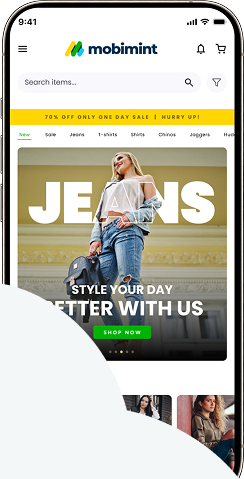
We are seeing this with early stores we onboard. They aren’t just selling products; they are providing a faster, better way to shop. It is a utility, not just a storefront.
Think about how you shop. You probably have the Amazon app or the Starbucks app. You don’t go to their websites. You go where the friction is lowest. Your customers want that same convenience from your brand.
Stop the leaking revenue today
Every day you wait to fix your retention, you are losing money. Your competitors are likely already looking at how to move their best customers off the “rented land” of social media and onto their own platforms.
You don’t need a million-dollar budget to do this. You just need to realize that the mobile web was never meant to be the final destination for a growing brand.
If you are doing over $10k a month, your data is already telling you this story. Look at your returning customer rate. If it is under 20%, you have a massive opportunity to double your profit without spending another dollar on ads.
Takeaway
True growth happens when you stop obsessing over the top of the funnel and start plugging the holes at the bottom. By reducing mobile friction and owning your communication channels, you turn one-time buyers into lifelong fans.
Check your Shopify analytics right now and see what percentage of your mobile visitors actually complete a purchase compared to desktop users.