How do I get my customer acquisition cost back under $40? I get this question at least twice a week from Shopify founders. My answer usually annoys them because I don’t think the CAC is actually the problem.
The expensive trap of the one-time buyer
Most store owners focus on getting customers. The smartest brands focus on keeping them. If you are spending $45 on Meta ads to acquire a customer who spends $65 once and never returns, you are effectively paying to work for free. After COGS, shipping, and merchant fees, that $20 spread vanishes.
We see this constantly with mid-market apparel and beauty brands. They scale to $100k a month through brute force ad spend. Then the algorithm shifts, or a new competitor bids up their keywords, and the profit margin evaporates. They have a traffic problem because they don’t have a retention strategy.
High conversion rates can be deceptive. A 4% conversion rate looks great on a Shopify dashboard, but if 90% of those conversions are new users who never come back, you are on a hamster wheel. You have to buy your entire audience every single morning from Mark Zuckerberg.
The math of the 5 percent lift
Retention economics work differently than acquisition. When you acquire a new user, you pay the full freight of the ad click. When a repeat customer buys, that marketing cost is zero, or perhaps the pennies it costs to send an automated message.
Research from Bain & Company frequently cites that increasing customer retention rates by just 5% can increase profits by 25% to 95%. This happens because repeat customers spend more over time. They trust the sizing. They know the shipping speed. They skip the \”research\” phase and go straight to the cart.
Think about the compounding effect. If you have 1,000 customers and keep 200 of them, you start next month at 200 sales. If you keep 400, you start at 400. Over twelve months, the brand with the higher retention rate builds a massive moat of \”free\” revenue that the acquisition-heavy brand can never catch.
Breaking down the profit per order
Let’s look at a typical unit economic comparison for a skincare brand. This is a real scenario we analyzed for a store doing about $80k a month. They were frustrated that their net profit wasn’t moving even as top-line sales grew.
| Metric | New Customer (Acquisition) | Repeat Customer (Retention) |
|---|---|---|
| Average Order Value | $72.00 | $88.00 |
| Marketing Cost (CAC) | $38.00 | $2.00 |
| COGS & Shipping | $28.00 | $31.00 |
| Net Profit | $6.00 | $55.00 |
The repeat customer is nearly 10 times more profitable. You don’t need 10 times more traffic to double your business; you might just need to keep 20% more of the people you already paid to reach.
Why mobile web is a retention killer
Mobile web browsing is transactional by nature. People find you via a Google search or an Instagram ad, they browse, maybe they buy, and then they close the tab. That tab is gone forever. To get them back, you have to hope they remember your URL or wait for them to see another ad.
Browser-based shopping feels like a temporary rental. There is no \”home\” for your brand on their device. Even with a fast site, the friction of logging back in, finding the password, and entering credit card details on a small screen kills the impulse buy.
Baymard Institute data shows that mobile cart abandonment sits around 80%. A lot of that is simply because the mobile web experience is clunky compared to the native apps people use all day, like Instagram or Amazon. If you want retention, you have to remove the friction that makes people hesitate.
Retention is the result of being the easiest option in the customer’s pocket.
The hierarchy of customer attention
Where does your brand live in a customer’s life? For most stores, it lives in the \”Promotions\” tab of Gmail. That is a crowded, noisy graveyard where 20% off coupons go to die. Getting a customer to open an email is a battle you lose 80% of the time.
SMS is better for open rates, but it is increasingly expensive and intrusive. If you text too much, people opt-out. If you text too little, they forget you. It is a fragile balance that often costs $0.01 to $0.03 per message, which adds up fast when you have 10,000 subscribers.
Real retention happens when you occupy the home screen. It is about visibility without the per-message tax. When a customer sees your icon every time they unlock their phone to check the weather, you are winning the awareness game for free.
-
- Email: 15-20% open rates, high noise, low cost.
-
- SMS: 90%+ open rates, high cost, high annoyance risk.
-
- Social: 2-5% organic reach, requires constant content production.
-
- Push: 90%+ visibility, zero per-message cost, stays on the lock screen.
Building the repeat purchase loop
A loop requires a trigger and a low-friction path. If a customer buys a 30-day supply of vitamins, the trigger should happen on day 25. On a website, that trigger is an email that likely gets missed. The path requires clicking a link, waiting for a browser to load, and logging in.
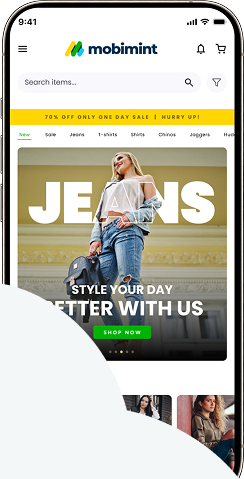
Contrast that with a native environment. The notification appears on the lock screen. One tap opens the product page. FaceID handles the login. Apple Pay or Google Pay handles the payment. The entire re-order takes 15 seconds.
We’ve been looking at how early-stage brands use these loops. It isn’t about constant “Sale” blasts. It is about utility. Things like “Your order is out for delivery” or “That item you liked is back in stock” create a reason to return that doesn’t feel like a sales pitch.
I recently spoke with a founder running a home decor brand on WooCommerce. They realized that their most loyal customers were checking the “New Arrivals” section three times a week. By making that check-in easier, they saw their 90-day repeat rate climb by 12% without increasing their Facebook budget at all.
The “Founding Member” mentality
As we build out our own platform, we are focusing heavily on these retention mechanics. Most tools charge you more as you grow. They tax your success by charging per subscriber or per notification. We think that is the wrong incentive for a builder.
We are looking for 100 founding members who are tired of the subscription tax on their growth. We want to help stores move away from the “rented audience” model. If you can own the relationship on the device, you stop being a slave to the ad auctions.
It isn’t a fit for every store. If you sell a product people only buy once every five years, retention isn’t your primary lever. But for fashion, beauty, pet supplies, or anything with a replenishment cycle, the math is undeniable.
Takeaway
Stop obsessing over the top of your funnel while the bottom is leaking profit. A small shift in how many customers come back for a second purchase will do more for your bank account than a 50% increase in cold traffic.
If you want to see how the math of a native app changes your retention numbers, let’s look at your current mobile drop-off together.